Bio Weekly Response 4

This week we focused on population and variance. Population is a localized community of animals of the same species that breed with each other. Populations evolve through natural selection as the fittest individuals are selected to survive and reproduce and pass on their genes to their offspring. The genetic makeup of the population will change over time as favorable traits are passed down and increase in frequency.

In order for this to work, you need to have variance in the population. Variance is the raw material for natural selection. If the population was completely uniform then there would be no way of it to evolve because all individuals would be equally fit for the environment. Because of variety within the population, certain individuals will have a greater reproductive success.

Where does variance come from? It comes from mutations and sex. Mutations happen randomly and are changes of DNA in certain individuals. Some mutations can increase an individuals likeliness to survive, while other mutations can have the opposite effect and are not usually passed down. Sex is the recombination of genes. Each offspring will have a different genetic code than either parent so it is a way to mix the genes and have new arrangements of DNA every generation.

Changes in allele frequency are also caused by gene flow and genetic drift. Gene flow is the movement of individuals in and out of a population which affect the gene pool. This reduced differences between populations. For example, humans are having a greater gene flow as technology and transportation has made traveling easier. It has been predicted that in the future, humans will be much more similar to each other in appearance.

Related image

This photo if famous for representing what a future American citizen will look like as more people from different races, ethnicities and locations reproduce more and more.

Genetic drift is an effect of chance events such as bottleneck and flounder events. These events usually result in the loss of alleles in the gene pool which reduces variation and adaptability.

Image result for bottleneck effect

We also learned about the Hardy-Weinberg equations which represent a hypothetical population that does not have natural selection. This could never happen in reality but it serves as a useful tool to measure what type of evolution is happening in different populations.
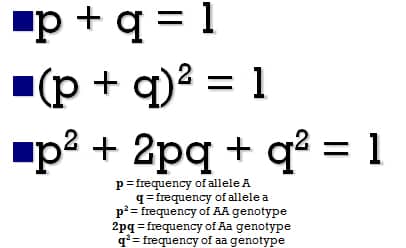
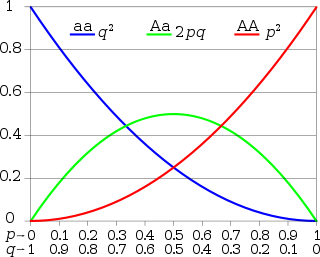
Image result for hardy weinberg equilibriumImage result for hardy weinberg equilibrium

Bio Weekly Response 3

This week we continued learning about evolution and used fossil record, anatomical record, phylogeny, analogous structures, molecular record, artificial selection, and biogeography to explain different ideas about evolution.

Fossil records help show the succession of organisms and can even show evolutionary links between groups of organisms (transitional fossils). We measure the age of fossils using radioactive decay.

Image result for transitional fossils

Anatomical records show homologous structures, traits that have formed because of common ancestry. They have similar structure and similar development but different functions. They are used as evidence of close evolutionary relationships.

Phylogenic trees show the history of species and evolutionary closeness of different species by seeing how far back their most recent common ancestor was.

Analogous structures differ from homologous structures because they are formed from similar evolutionary pressure instead of common ancestry. They have different structures and different development but similar functions. They are used as evidence of convergent evolution. One example of this that we studied in class is the human eye vs. the octopus eye. They both serve the same function but clearly have developed very differently.

Molecular records provide a way to test evolutionary closeness by examining the proteins and genetic codes of different species. Since all life uses a genetic code, DNA can help us build family trees of species. More differences in the genetic code mean that the species are farther related but few differences mean that they are probably closely related because there has been less time in their history to develop mutations to change the code.

One way that people have used evolution to our advantages was through artificial selection. This includes Native Americans farming corn to be edible and people breeding different breeds of dogs. How did the Native people know to breed certain types of corn? What methods did they use to do this? Will dog breeds ever turn into different species?

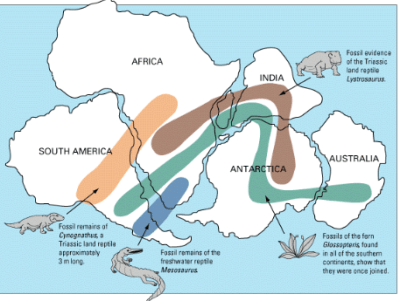
Biogeography was an interesting thing that we learned about this week. It means that organisms found in a particular area tend to be more closely related. This makes esnse because animals have a certain range that would allow them to reproduce more and develop more in certain areas. How did scientists connect the similarities in fossils along the southern tip of South America, Africa, India and Australia? Were these fossils from the time of Pangea?

Screenshot 2018-09-30 at 5.06.14 PM.png

Bio Weekly Response 2

This week we learned about evolution, common ancestry and the origins of life. We looked at two different hypothesis on the origin of life, one supported the replication-first theory and the other explained the metabolism-first hypothesis. We used these worksheets to learn about the differences in the two theories.

The chapter 19 reading was about evolution, variation and natural selection.

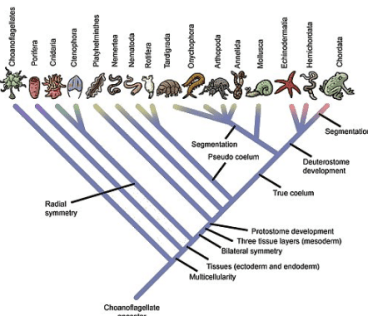
Screen Shot 2018-09-23 at 4.32.10 PM.pngIt included these tree-shaped diagrams that show how different species come from common ancestors. What was that common ancestor? I am curious how people have reacted to these ideas of evolution over the years and why some people still don’t believe in it.

Bio Weekly Response 1

During this week, 9/10-9/14, we started learning about evolution. We used the Galapagos finches and the Rock Pocket mice to visualize and understand natural selection and evolution.

We filled out a packet on the Galapagos finches and discussed how evolution, adaptations and natural selection had played a role in their survival. Peter and Rosemary Grant are ecologists who studied medium ground finches on Daphne Major, an island in the Galapagos, and saw evolution happen in just a small amount of time. During the drought of 1977, the small seeds on the island were harder to find so the finches that had small beaks had a difficult time finding food to eat because their beaks were too small to eat the large, spiny seeds. Many of the small beaked finches died off while the large beak birds survived at much higher rates.

The birds with large beaks had a higher fitness and were adapted to survive better than the small beaked birds in this environmental situation. Now the interesting part was what happened the next year when Peter and Rosemary came back to the island and measured the beak sizes of the offspring. The next generation of finches had larger beaks on average than the generation before them. The finches that survived the most had large beaks and passed this gene onto their children. This is how natural selection, the organisms that were ‘selected’ by their environment to survive and reproduce pass their successful traits onto their children, creating a more fit generation.

We also learned about the Rock Pocket mice. They were also used to demonstrate natural selection and evolution. The tan mice were hidden from predators in the sand but stood out on the black rock. The dark mice were first caused by a mutation in the tan mice population but since the trait was favored for the dark rock environment, those mice survived and passed on that adaptation. Eventually, the population of Rock Pocket Mice living on the black rock was almost exclusively dark mice while the population of mice living in the sand was predominately made of tan mine.

Natural selection is a process where fit organisms that have adapted to their environment will survive and reproduce and those that don’t have the correct traits won’t survive, which is how species adapt and get better over time. While evolution was previously thought to take a long time and many, many generations, the work of the Grants and the example of the Rock Pocket Mice prove that nature is constantly evolving and that natural selection can be seen in just a few generations.

Mutation and reproduction are ways that species can increase variety that will help sections of the species survive even if part of the population is wiped out by natural selection.

What I’m wondering coming off from this week is how will the changing environment force humans to adapt? Since we as a species have more control over our environment and have better technology than any other species, is evolution different for humans than other organisms or are we changing in similar ways to other species?