
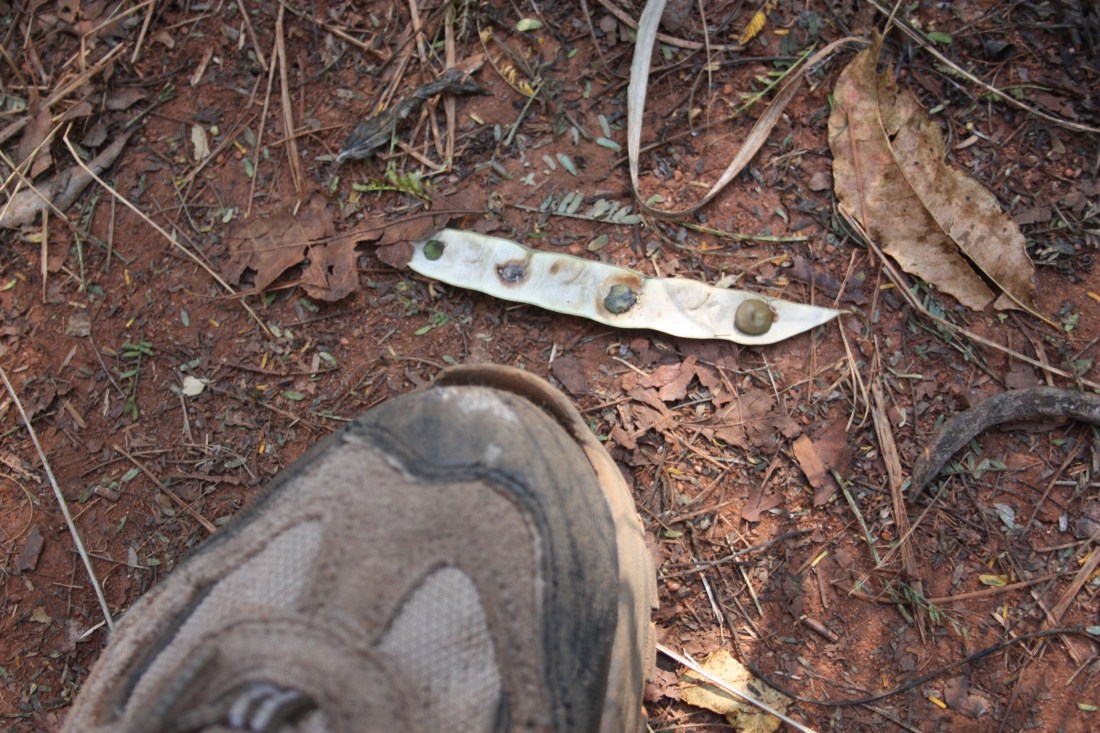
Term: Fruit- dried with seed
A dried fruit with seeds has dead, mature cells, and typically is referring to a seed pod or similar item. This photo shows the seed pod of an acacia tree that has fallen to the ground and split open to reveal the dry seeds inside.
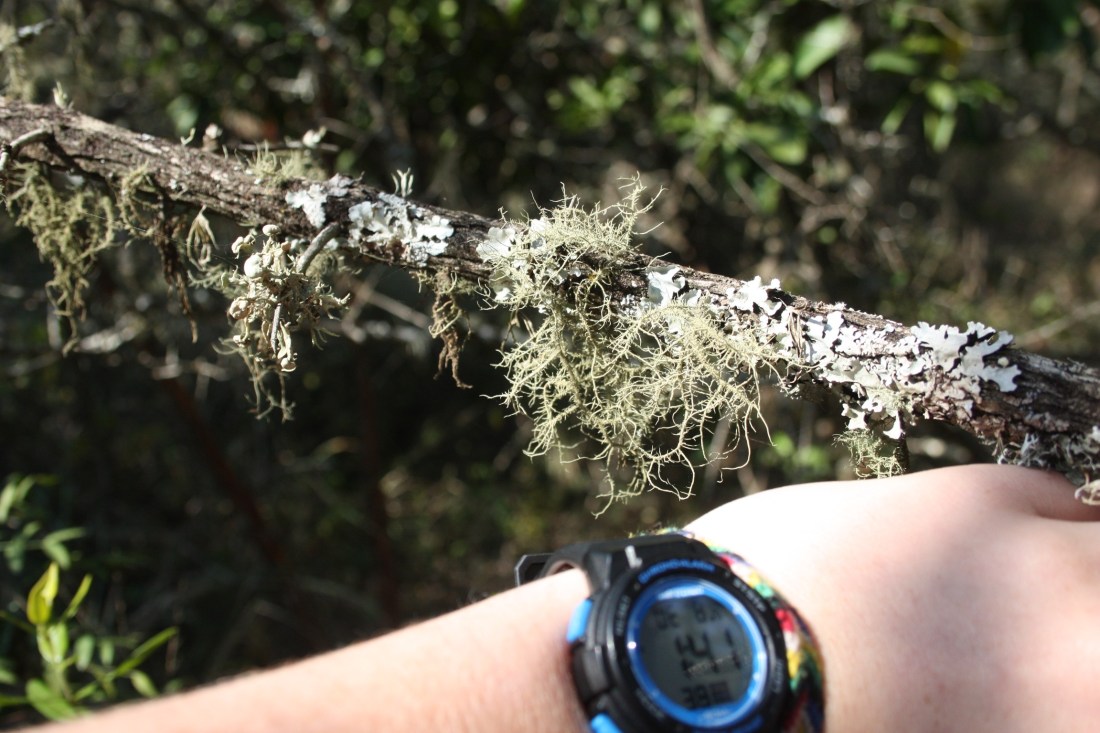
Term: Lichen
Lichen is a group of tiny plants that form a leaflike or branching growth on plants or rocks. It is typically gray, green, brown or white. The photo above shows lichen, the shorter whitish-gray plants, growing on top of a tree branch.
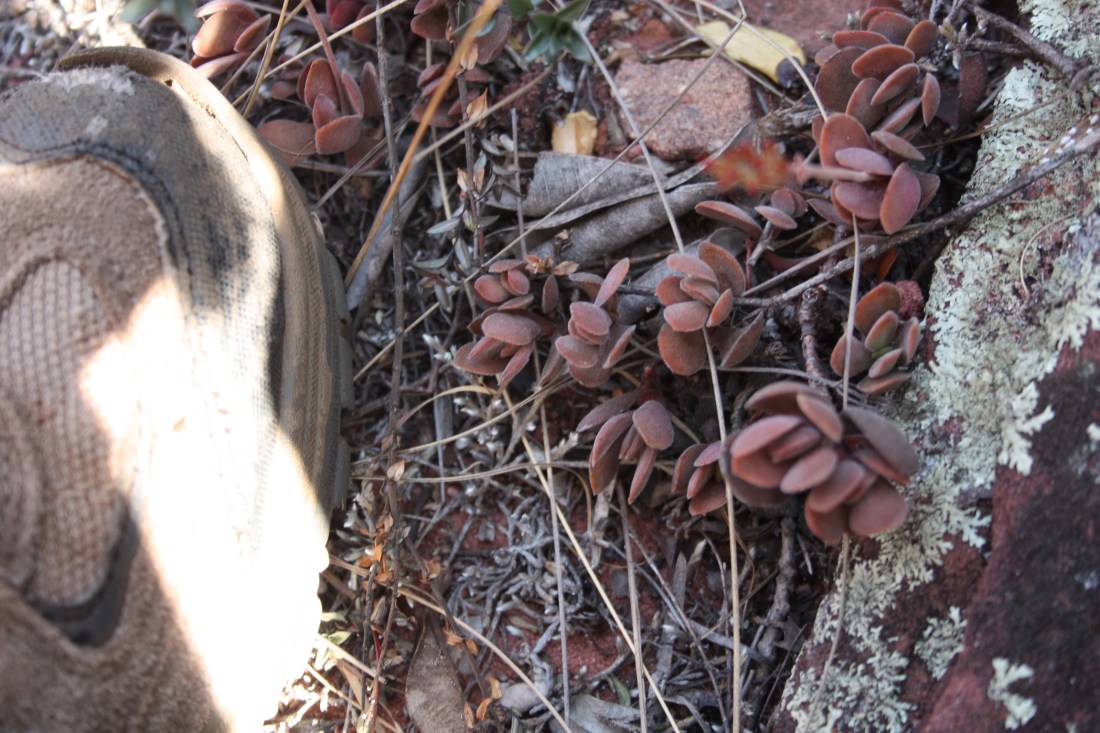
Term: Adaptation of a plant
An adaptation of a plant is a characteristic of a plant that has been formed over a long period of time that allows that plant to survive and thrive in a certain region. Plants with that adaptation survive for longer and reproduce offspring that carry on the successful traits. This photo shows a succulent, a plant that has adapted to a dry, arid climate by preserving water for long amounts of time and not needing much water to grow.
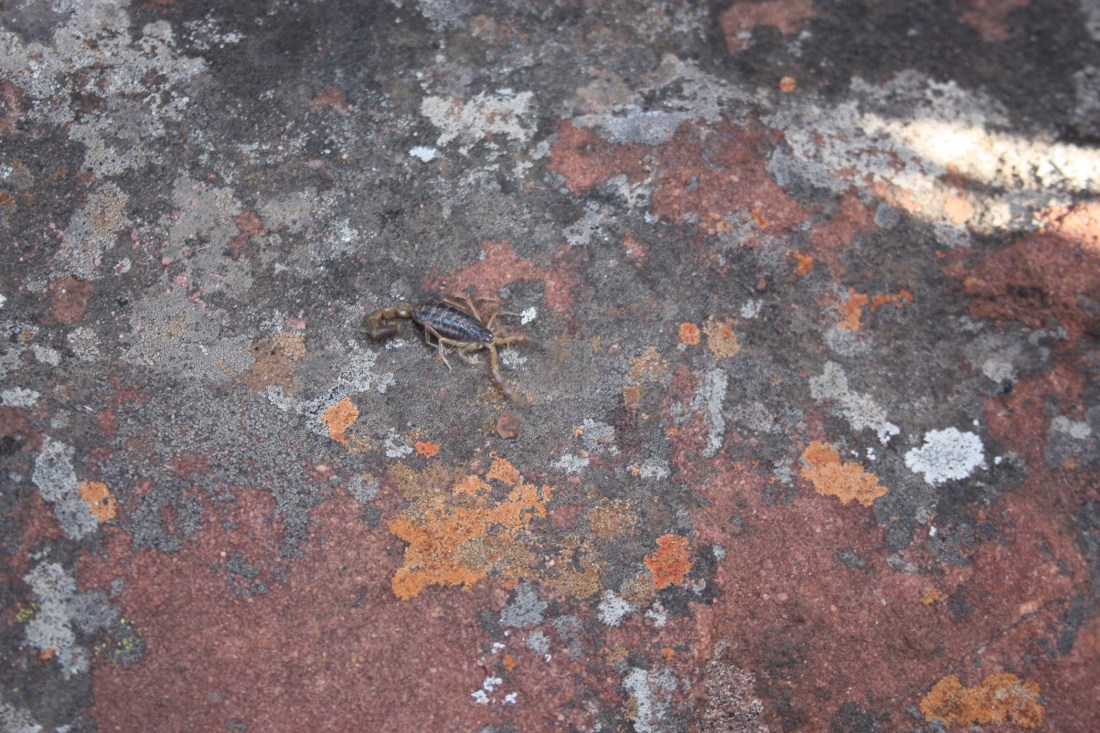
Term: Animal that has a segmented body
An animal that has a segmented body has different sections that divide the animal into repetitive segments. These different sections allow for free movement and make development easier. Scorpions have segmented bodies to allow for easier movement specifically in their tail region.
Term: R-strategist
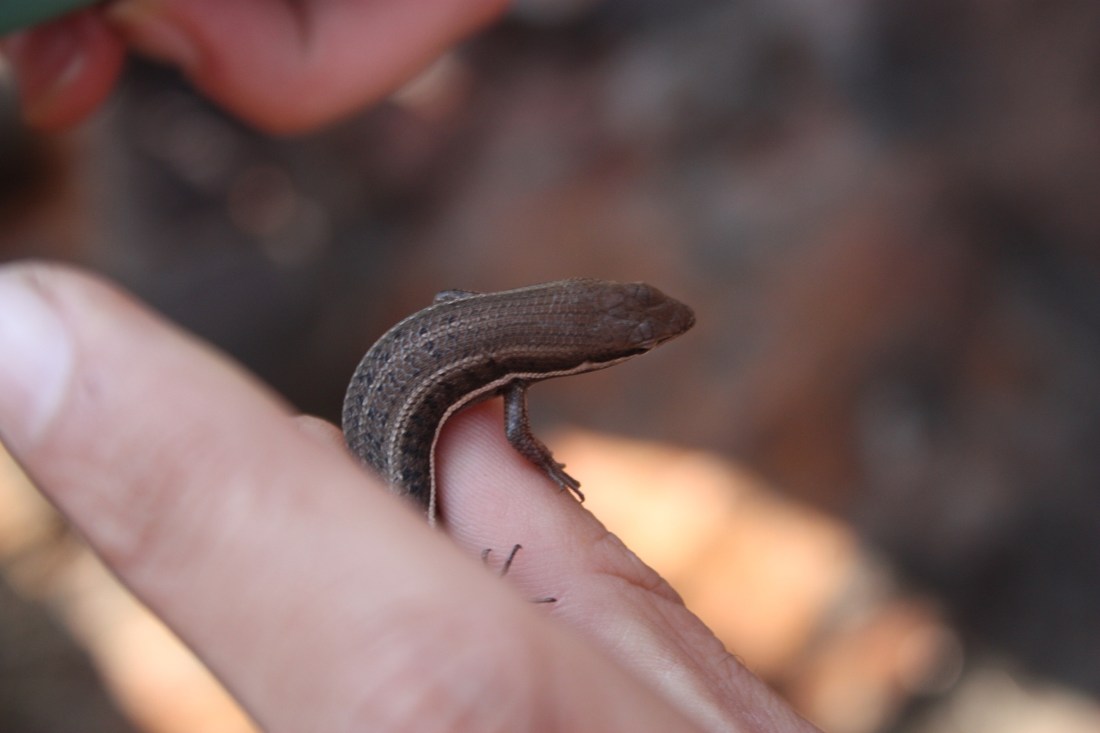
An R-strategist is an organism that has to have many offspring because it has an unstable environment and there are low survival rates for that species. Small animals that have many young at one time, like this lizard, are examples of R-strategists.
Term: Exoskeleton
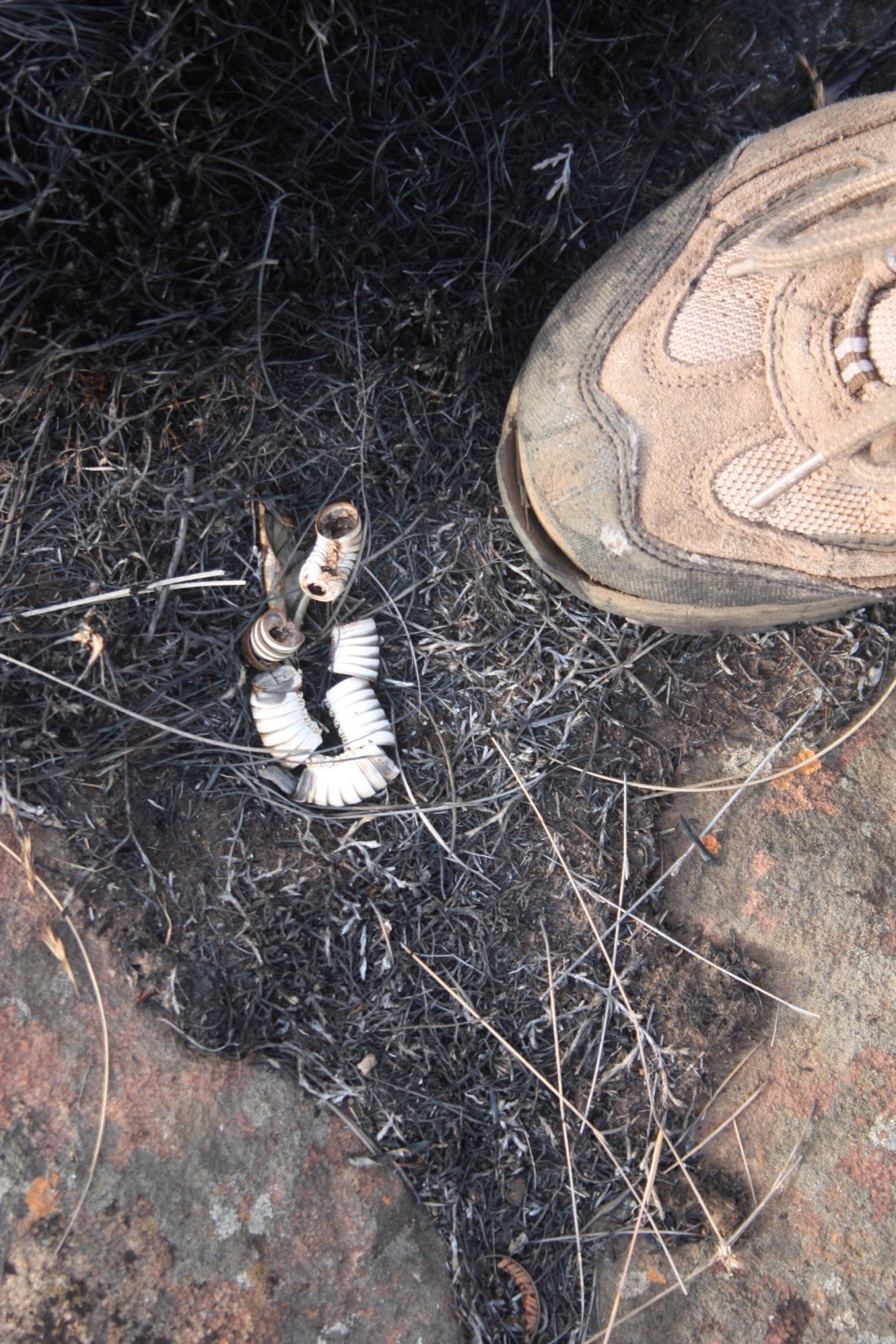
An exoskeleton is the hard outer layer of protective skin on invertebrate animals. Because of its structure, exoskeletons also provide support for the animal because they don’t have the internal structure that vertebrate animals do. This photo shows a disposed exoskeleton of a certain type of millipede.
Term: K-strategist
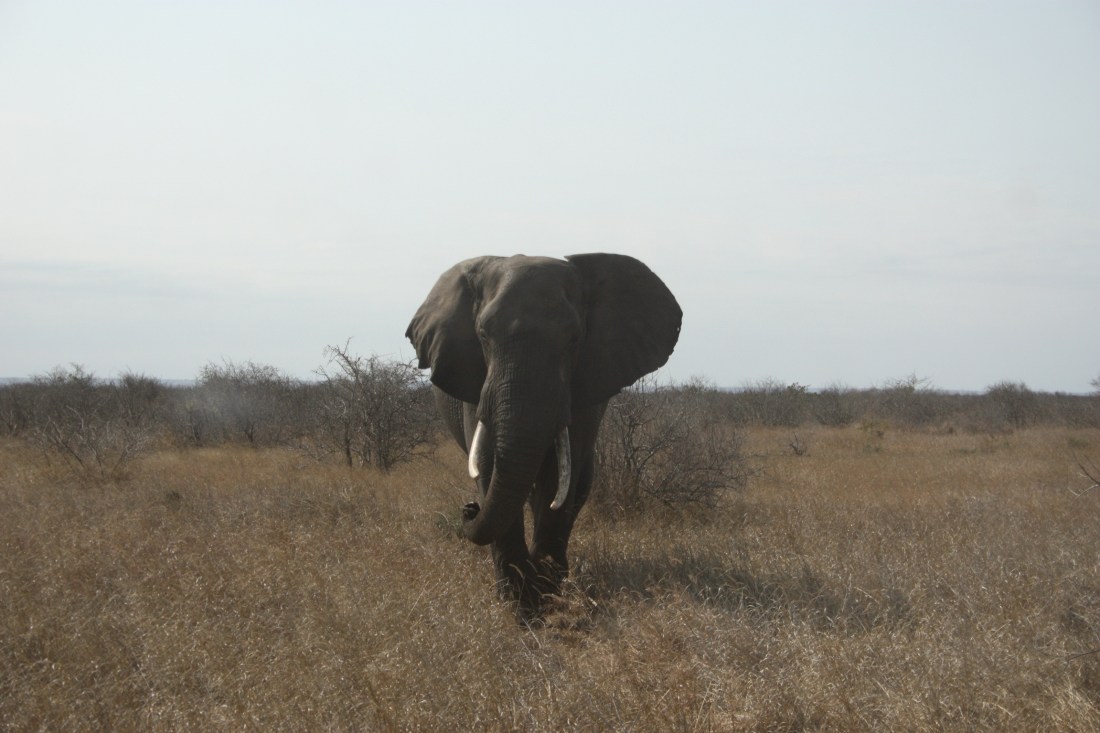
A K-strategist species is one that lives in a stable environment and produces few offspring. An elephant, like the one in the picture I took above, is a good example of a K-strategist because they are very large animals that only have one or two children at a time, because the babies are very valuable and

Term: Frond
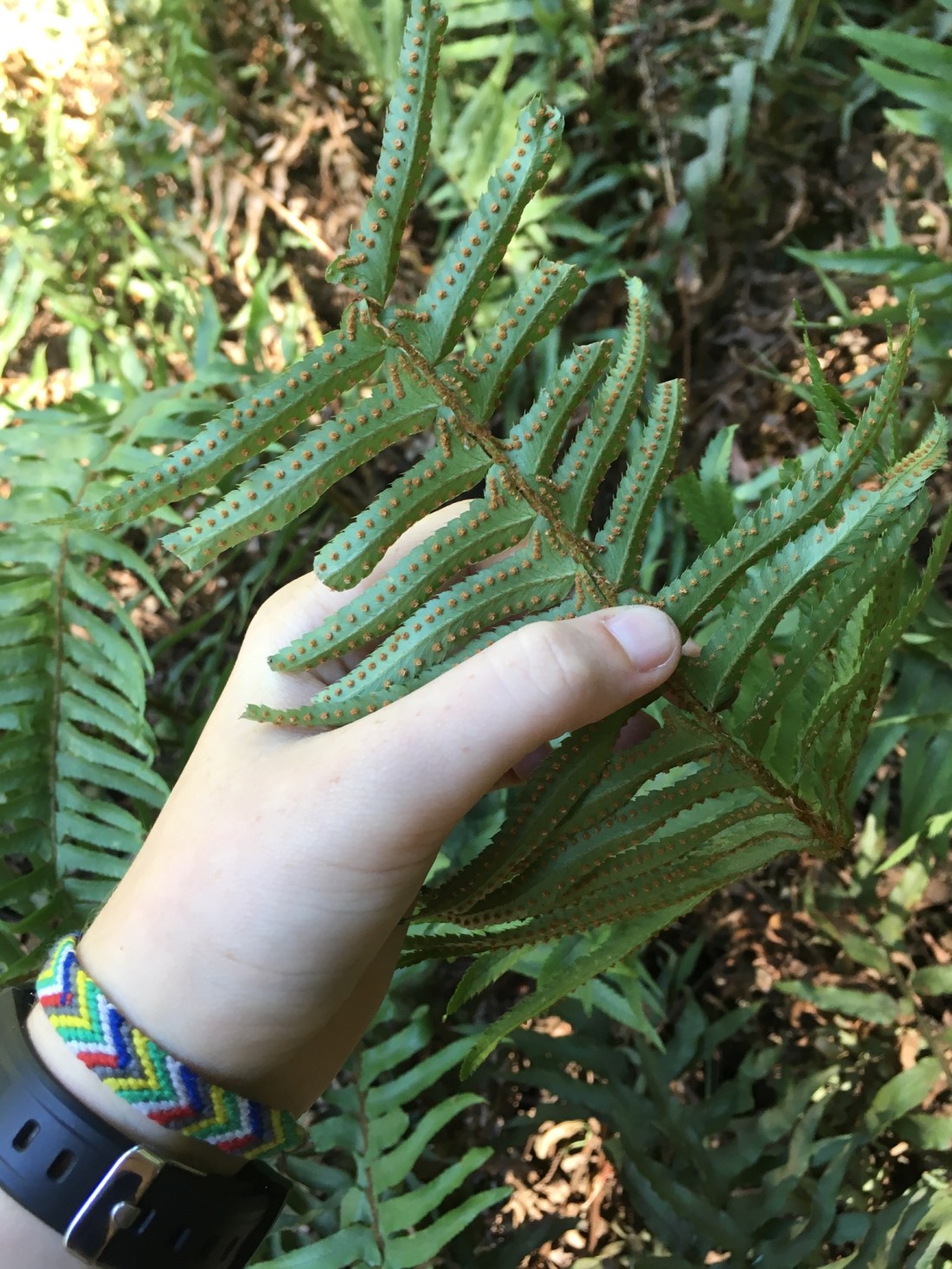
A frond is a leaf, usually with many divisions, of a palm, fern or similar plant. As you can see in the photo above, the fern frond is covered with asymmetrical smaller leaves spreading horizontally from the frond.
Term: Spore
A spore is similar to a seed in the sense that it is used to spread and create new organisms. Plants and fungi produce spores that are transported to new locations through wind or by brushing off on to passing animals. The fern pictures above has produced spores on the underside of its leaves that are soon going to be released and take root elsewhere.
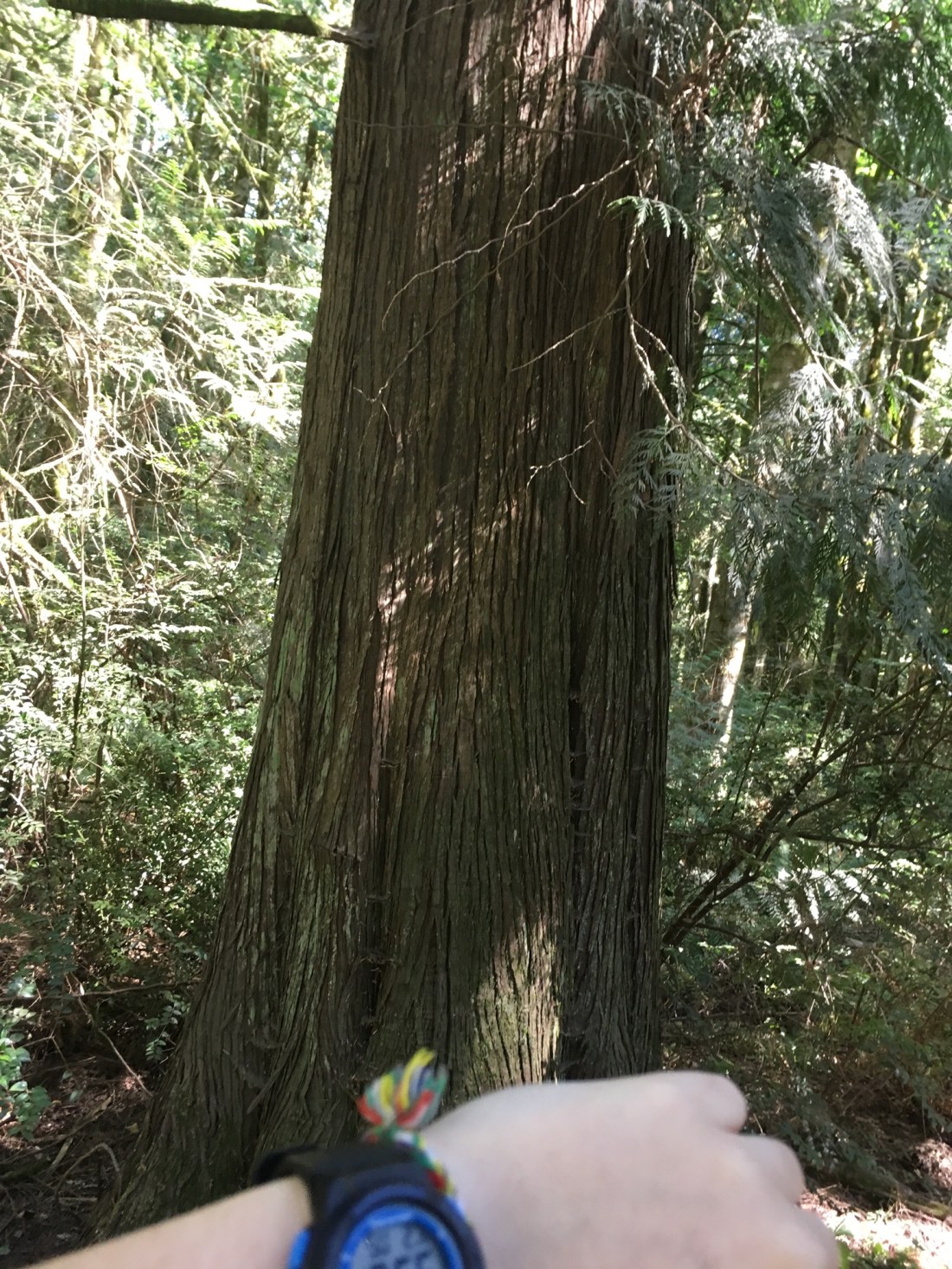
Term: Woody stem
A woody stem is a stem of a plant stem that produces wood as its structural material, typically trees or shrubs. These plants don’t die every year and their stems continue growing. The tree in this photo clearly has a woody stem because it is a large, years old plant that has a woody structure.
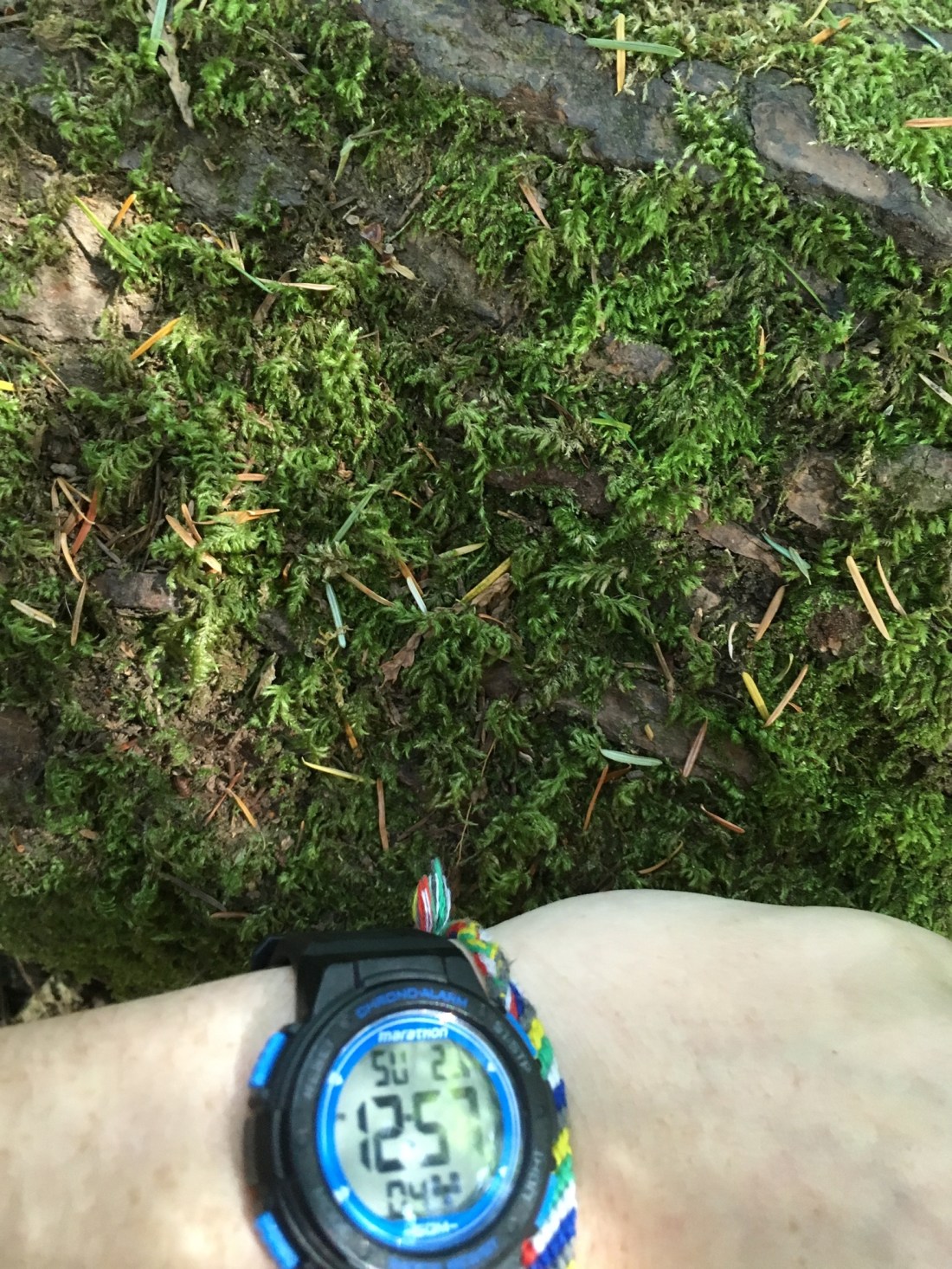
Term: Bryophyte
A Bryophyte is a small, flowerless green plant. The informal grouping consists of moss, liverworts, and hornworts. They grow best in moist climates and often grow on top of other, larger plants. The moss in the photo is a part of the Bryophyte grouping because it is a small, non-vascular plant that has no seeds or flowers.
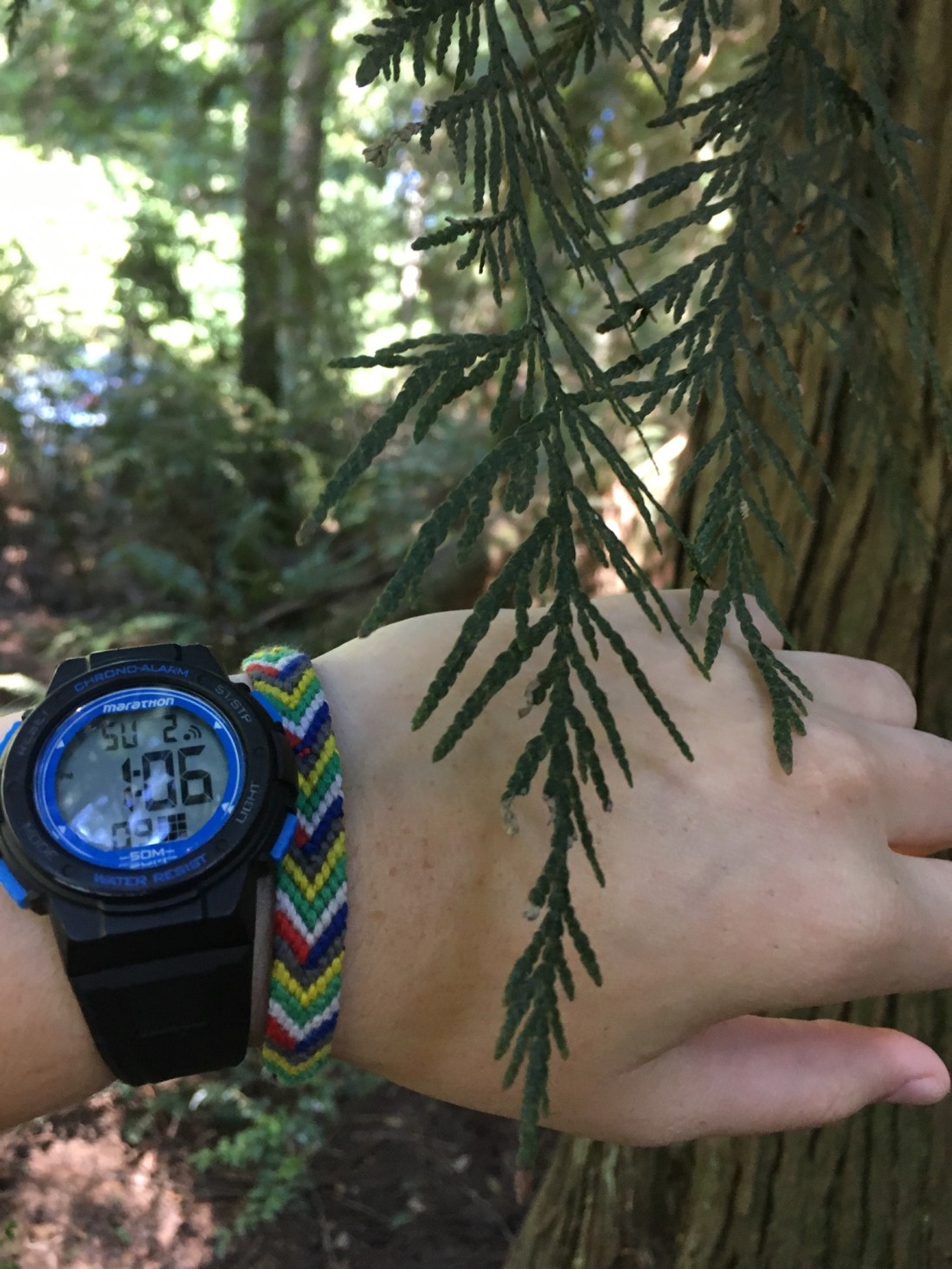
Term: Conifer leaf
Coniferous trees stay green all year round and do not lose their leaves annually. A conifer leaf is typically more of a needle shaped to reduce damage from the accumulation of snow. The leaves in this photo are from a coniferous tree in the Grand Forest and resemble a needle shape much more than a deciduous leaf would.
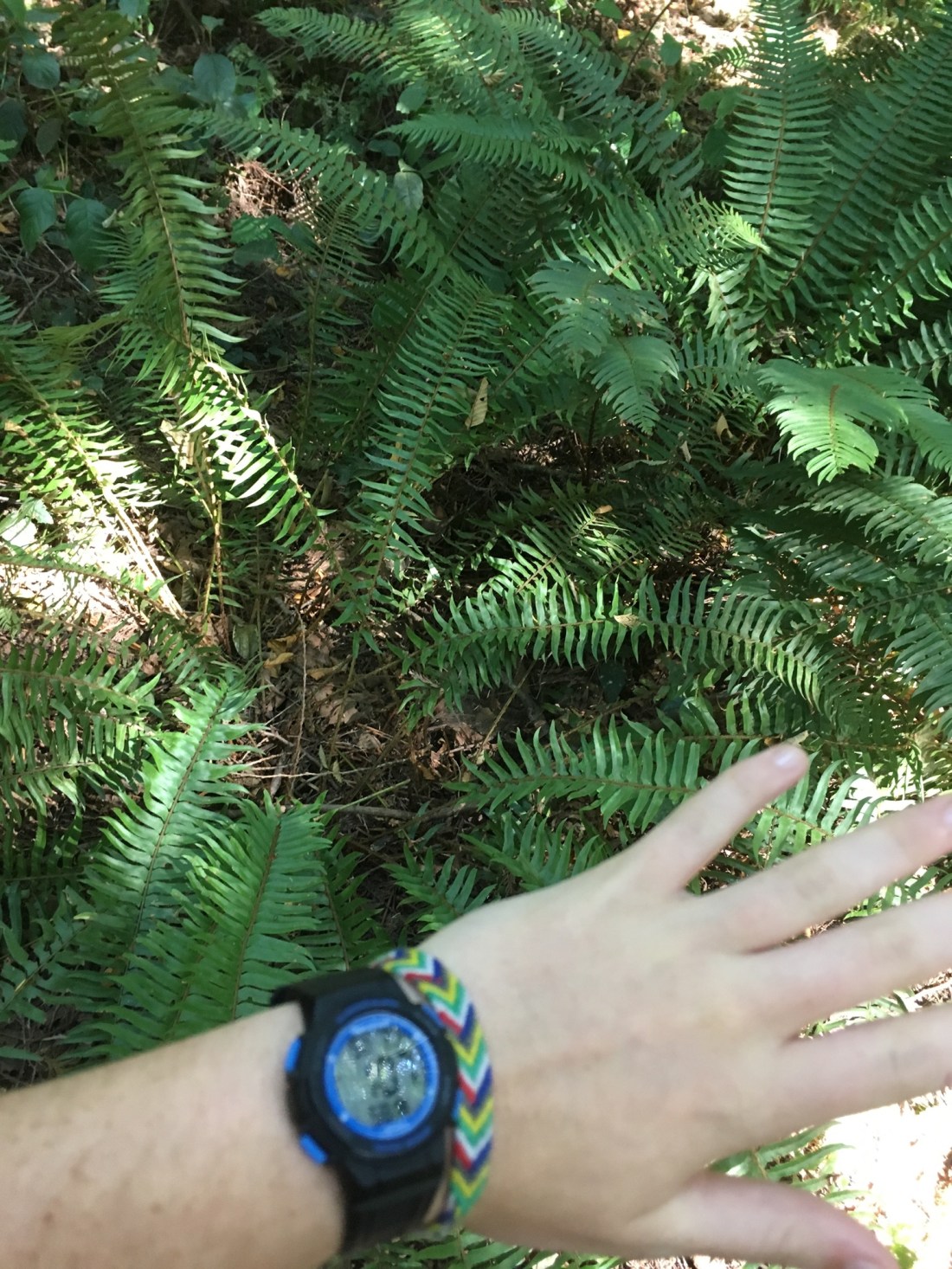
Term: Autotroph
An autotroph is an organism that creates its own food through photosynthesis rather than an organism that gathers nutrients through eating other plants or animals. This photo shows lots of plants, which are all autotrophs because they provide their own food.
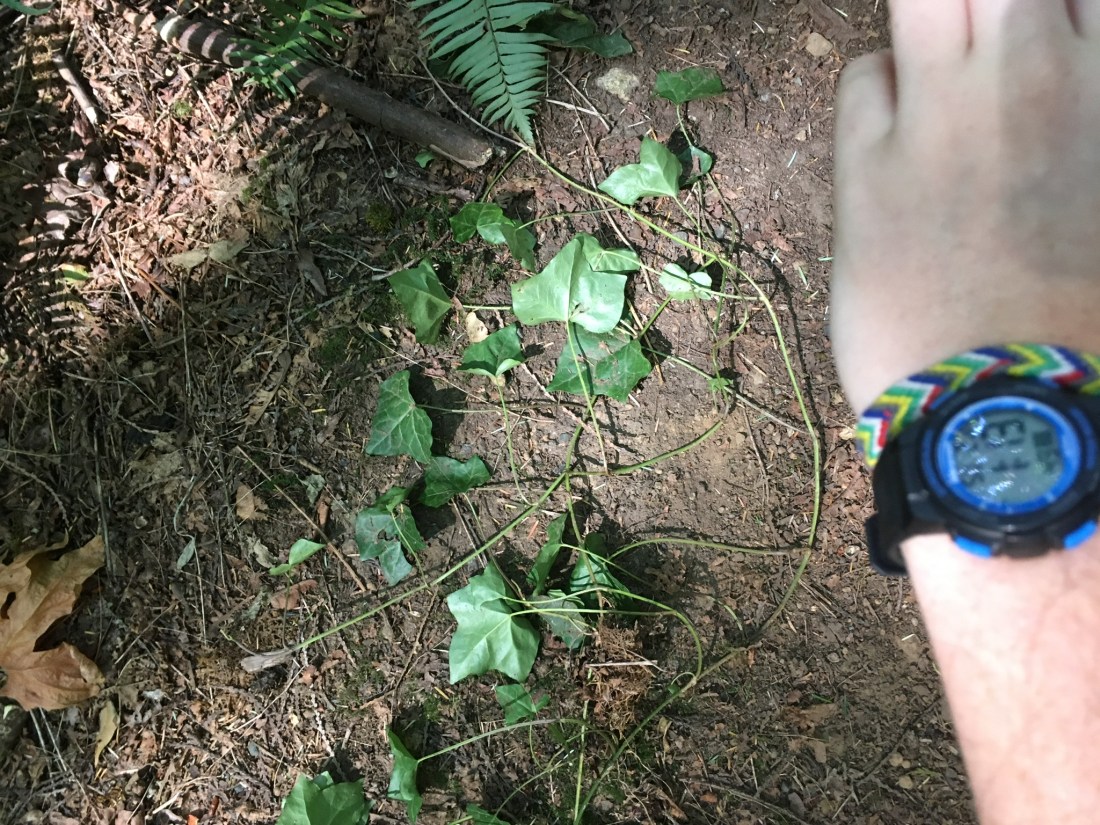
Term: Tendrils of a plant
A tendril of a plant is a specialized stem and is used to anchor and support. They generally twine around larger plants, although the tendril in the photo has fallen off of its host plant.
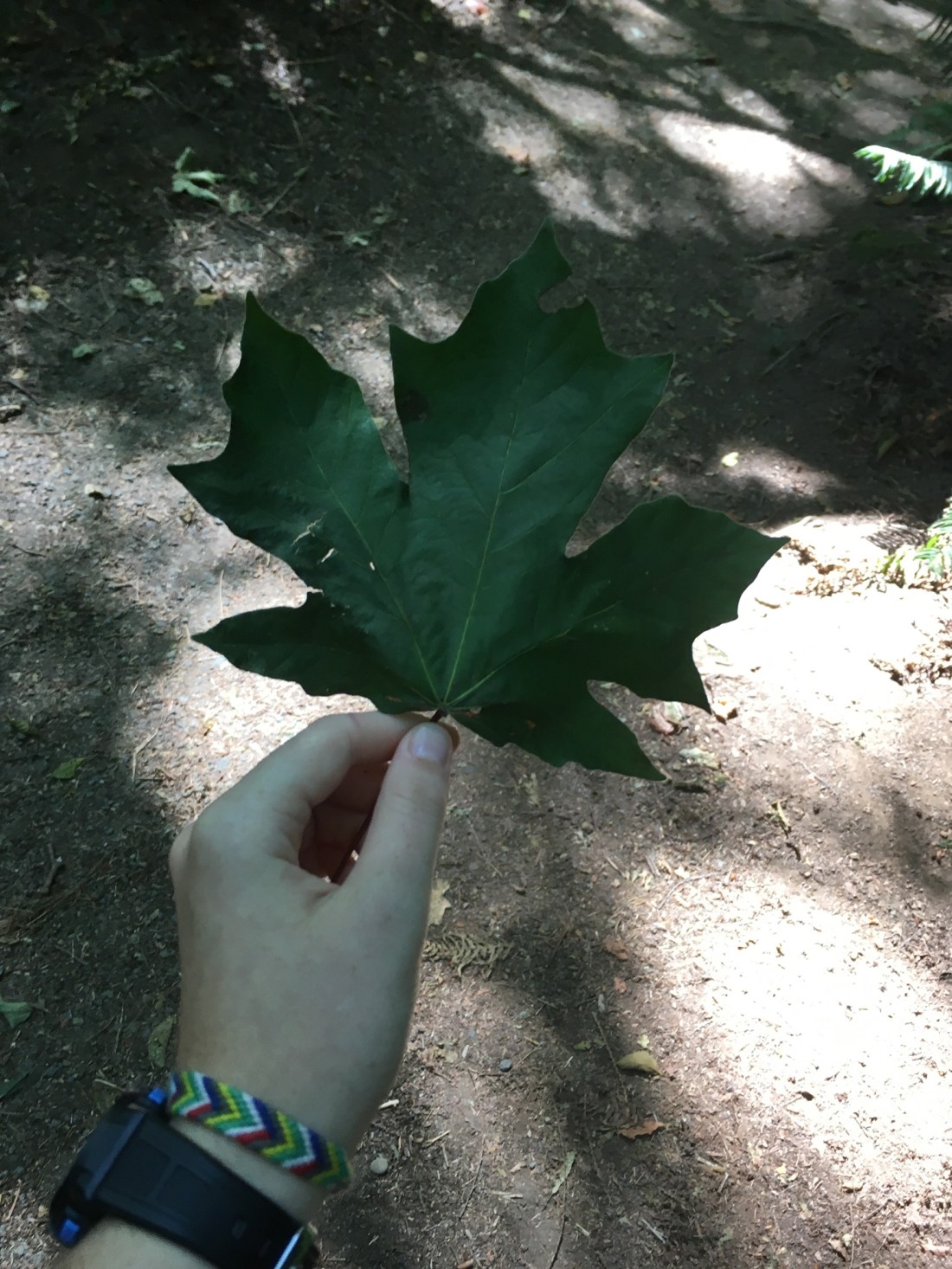
Term: Deciduous leaf
Deciduous trees lose their leaves every year during the winter. Deciduous leaves are typically broader and bigger than conifer leaves and the veins of the leaf are usually visible. This leaf is a deciduous leaf because of its size, shape and image. You can see the cells of the leaf on the underside.
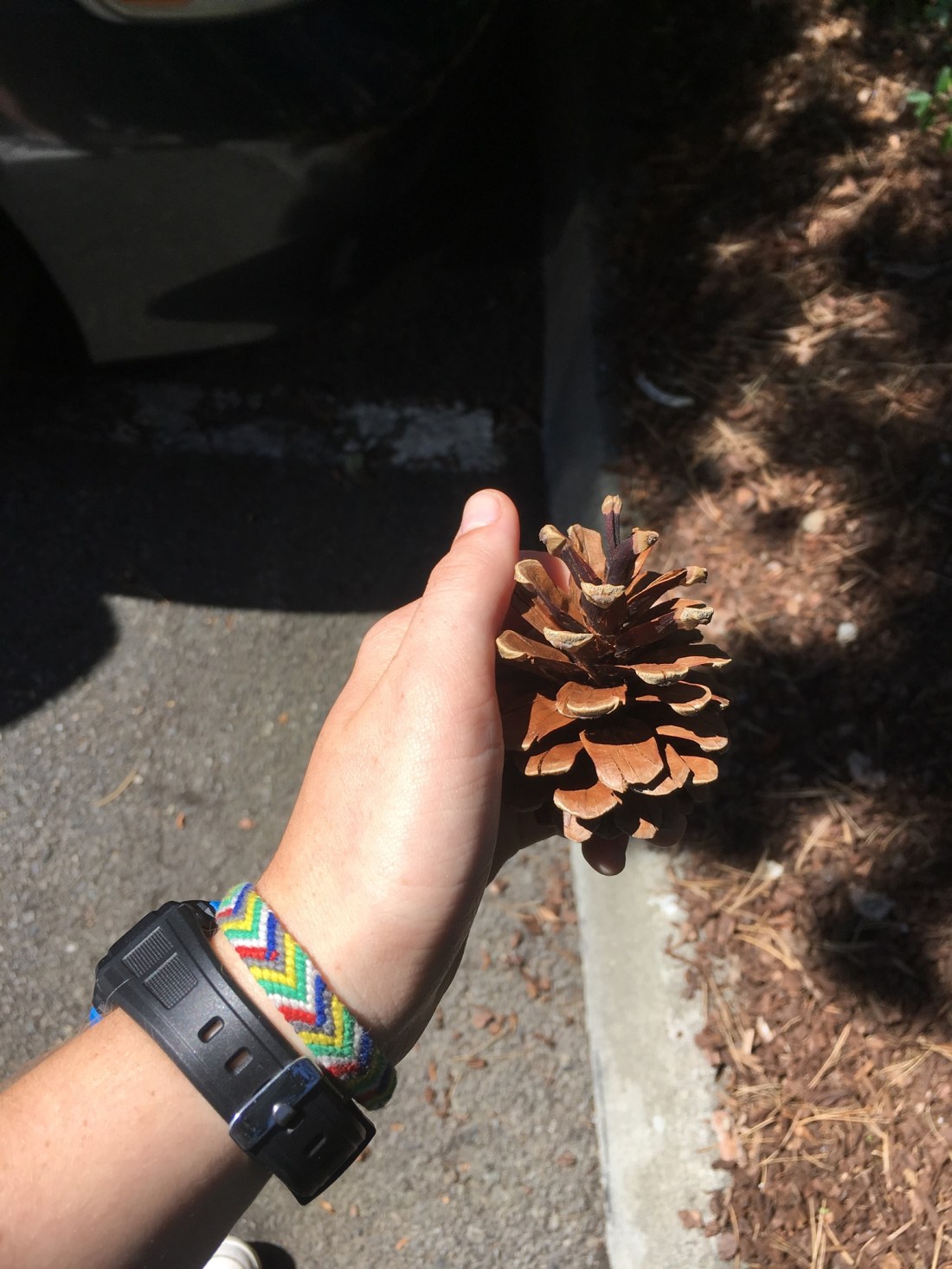
Term: Pine cone-female
A female pine cone differs from a male pine cone because the scales are open and the pine cone is larger in size than the male ones. This pine cone has very open scales that have a seed in them that will get pollinated by a male cone.
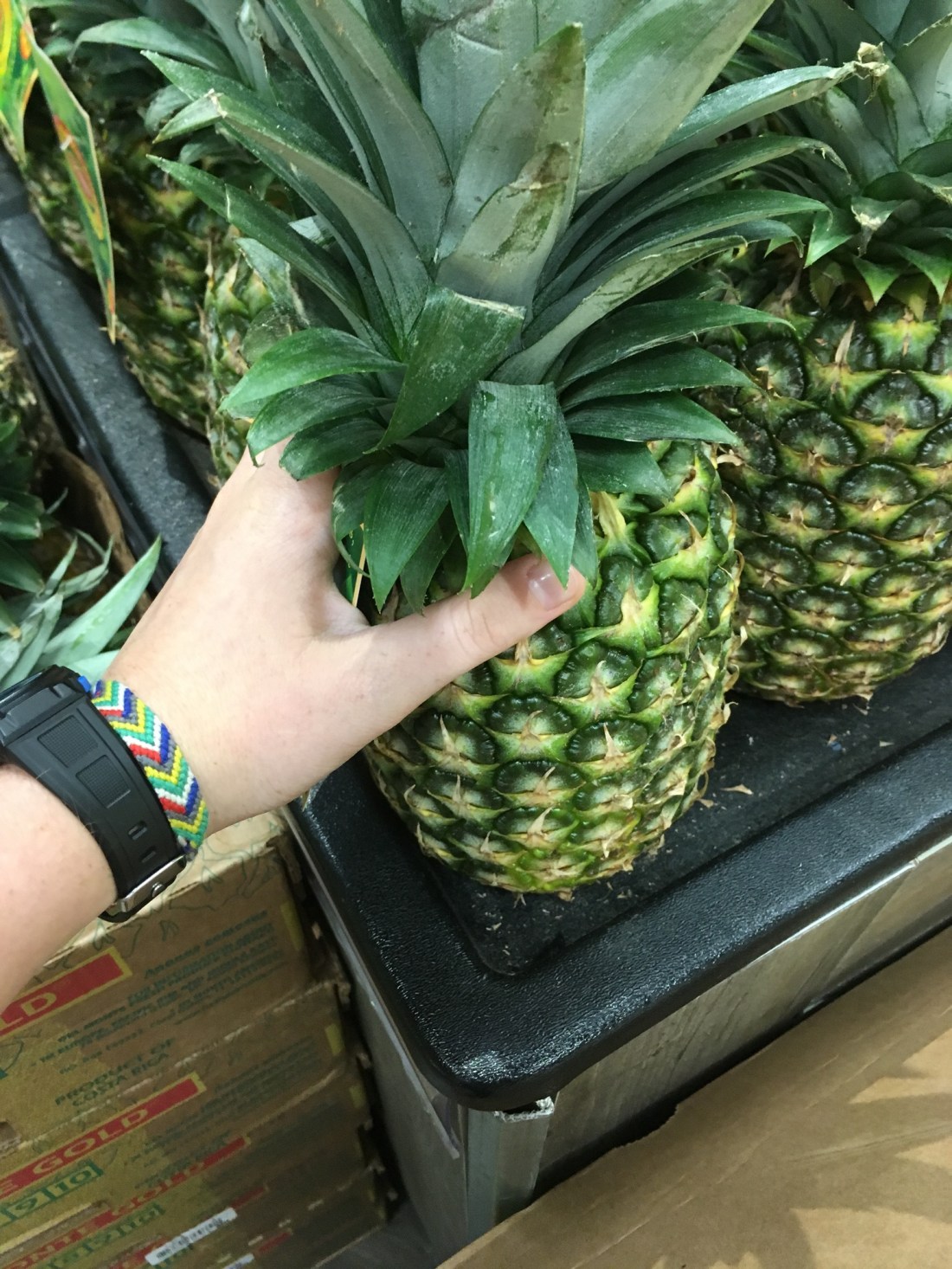
Term: CAM plant
A CAM plant is a plant that photosynthesizes through Crassulacean Acid Metabolism and are mostly succulents. They are adapted to dry, desert climates. A pineapple is a CAM plant and a member of the Bromeliaceae family.

Term: Pollen
Pollen is the small, dust-like particles in plants that are from the male part of a plant that can fertilize the female the female ovule. The pollen is visible in the center of these flowers, it is the yellow powder.
Term: Radial Symmetry
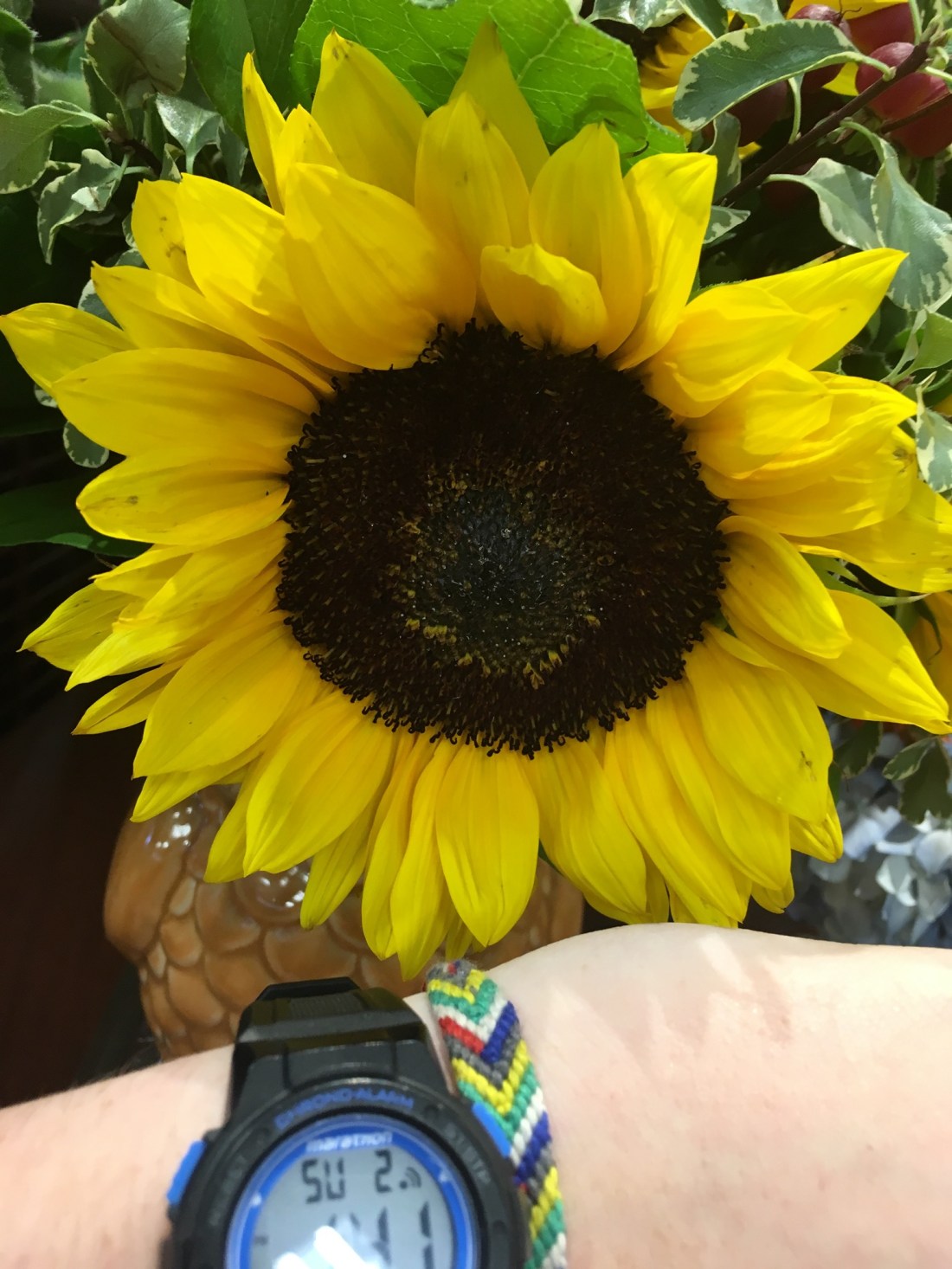
Radial symmetry is abundant in nature. It is a type of symmetry that starts in the center and has identical pie slices going out from the midpoint. A sunflower is an example of radial symmetry because the petals are layered from the center and it is a circular shape.

Term: Flower ovary
The ovary of a flower is within the center of the petals. It is fertilized by pollen from the male flower. It is a part of the female reproductive system and contains the ovule. The ovary is not visible from this photo but it would be within the petals at the base of the flower.

Term- Fermentation
Fermentation is the chemical breakdown of yeast and usually gives off heat and involves effervescence. It is used in the creation of beer in order to get the ingredients to produce the alcohol content.
Term- Dicot plant with flower and leaf
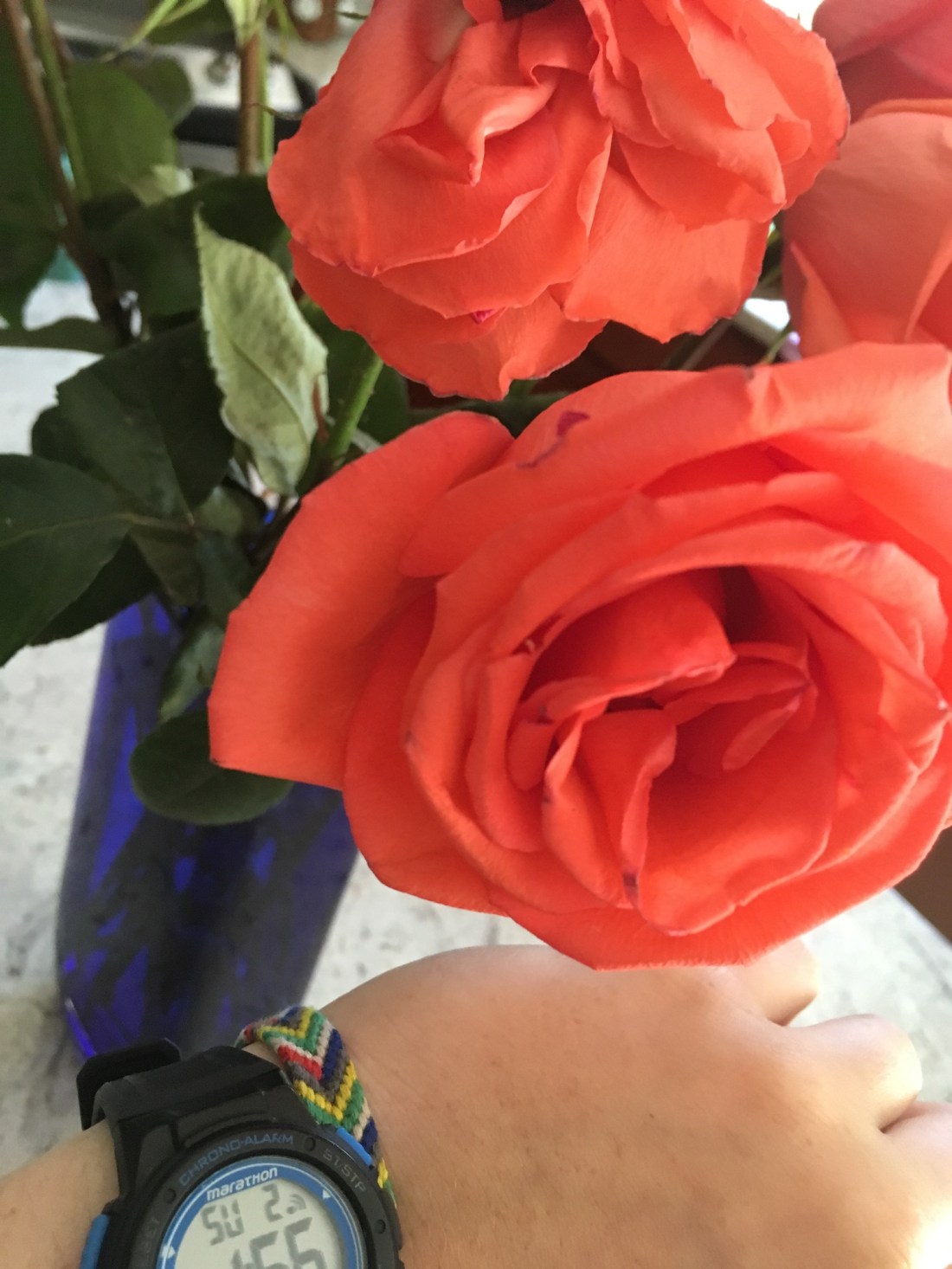
A dicot flower is a flower thats seed has two embryonic leaves or cotyledons. This is one of two groups that divide flowering plants, the other being monocots. A rose is a dicot flower because of their seed, foliage and flower structure. Their leaves form a branched pattern rather than a parallel pattern and their roots are branched as well.
Term: Cellulose
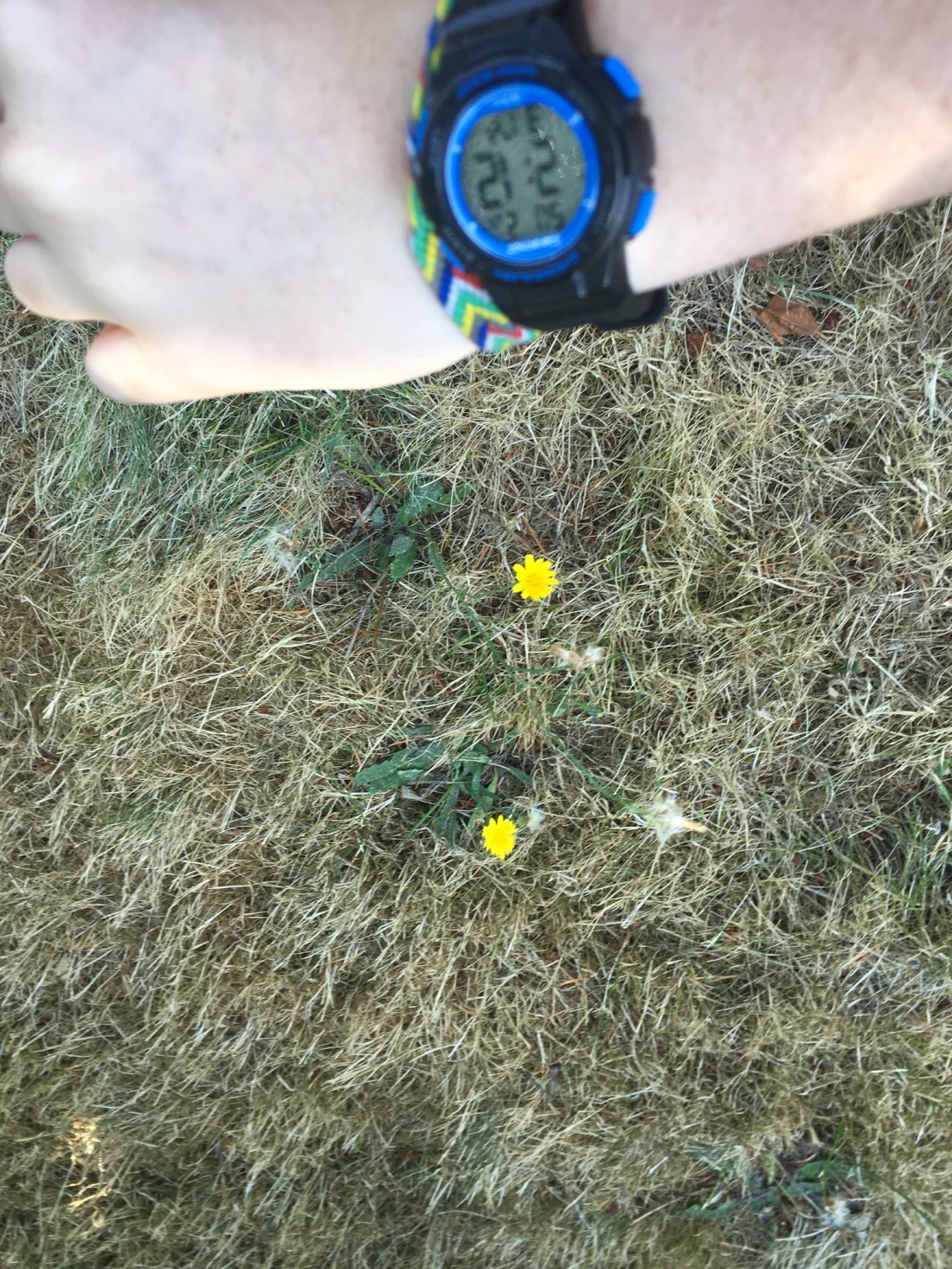
Cellulose is an insoluble substance that is the main constituent of plant cell walls. It is a polysaccharide consisting of chains of glucose monomers. Cellulose exists in all plants, such as the ones pictured, and is important in the process of photosynthesis.
Term: Insect
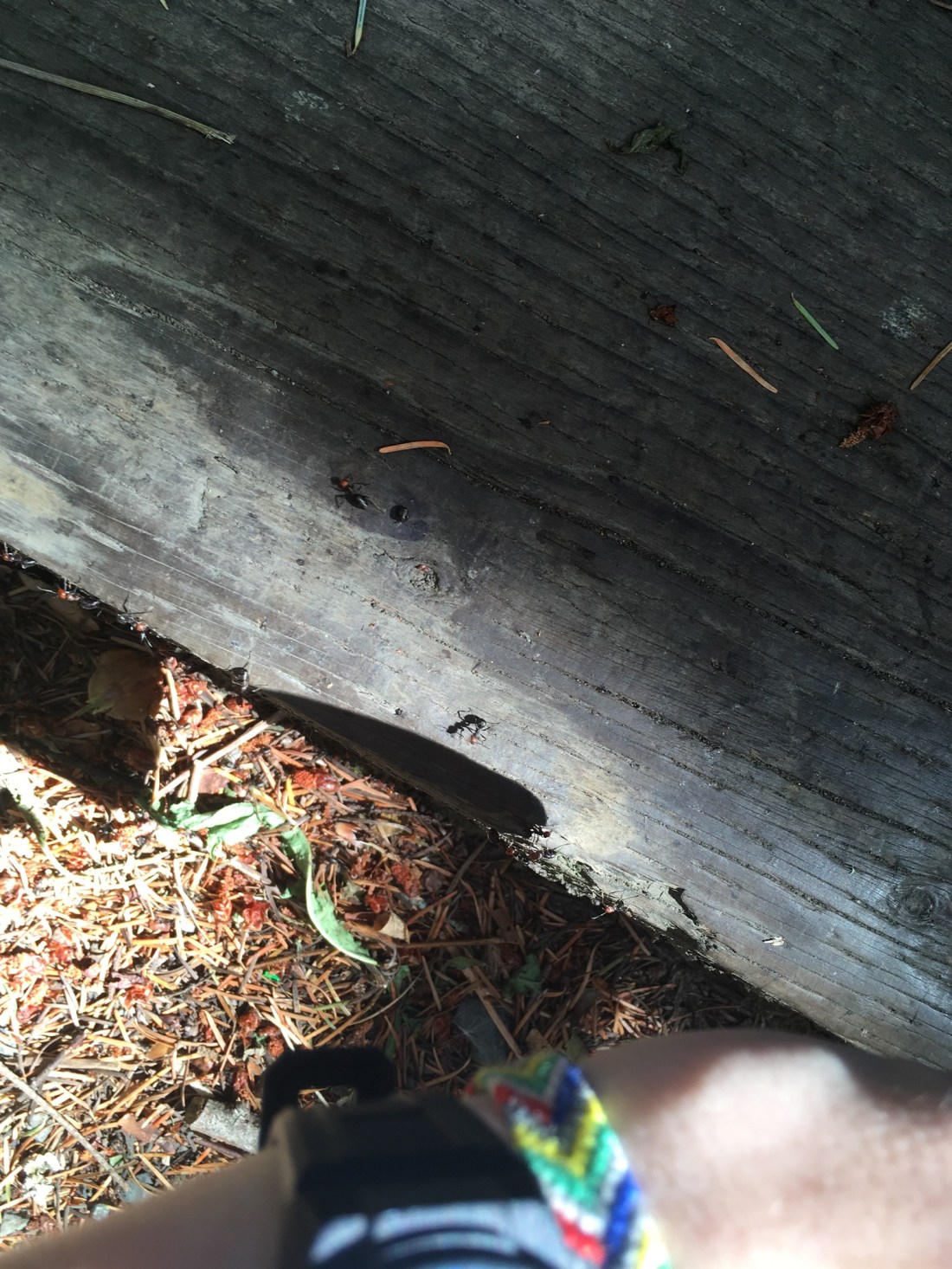
Insect is a classification of small arthropod animals that typically have several pairs of legs. They are usually invertebrates with a well defined head, thorax and abdomen, as seen clearly in the ant pictured above.
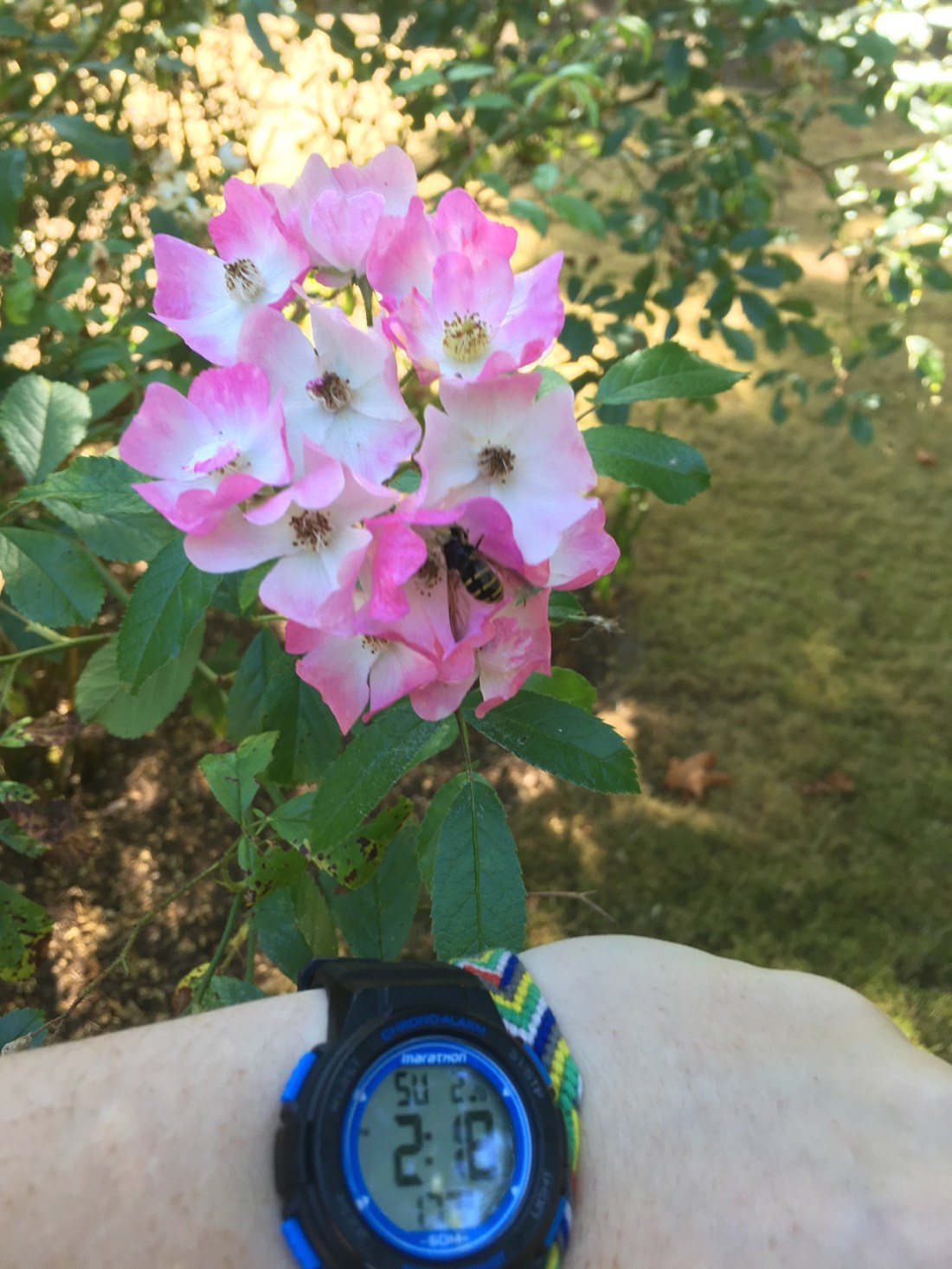
Term: Pollinator
A pollinator is an animal that assists in the pollination of plants such as flowers. A bee is a popular pollinator because of how they fly from plant to plant, carrying pollen on their feet, to gather nectar for honey production. They spread the pollen and allow fertilization of new flowers.
 Sara Irvin- AP Biology